Syria war is everybody's problem


STORY HIGHLIGHTS


  • NEW: The European Union clears the way for nonlethal aid to Syrian rebels

  • NEW: Britain's foreign secretary says the UK will announce new aid soon

  • The U.S. announced food and medical aid to fighters, plus $60 million in administrative aid

  • Aid is needed because of Syrian regime's "continued brutality," U.S. secretary of state says


Rome (CNN) -- The United States stepped further into Syria's civil war Thursday, promising rebel fighters food and medical supplies -- but not weapons -- for the first time in the two-year conflict that has claimed more than 60,000 lives and laid waste to large portions of the country.


Secretary of State John Kerry said the aid would help fighters in the high-stakes effort to topple Syrian President Bashar al-Assad, a conflict that has already spawned an enormous humanitarian crisis as refugees flee the fighting.


The ongoing fighting also poses the persistent threat of widening into a destabilizing regional crisis, including concerns that Hezbollah, Iran or others could gain control in Damascus after al-Assad's government falls.


"The United States' decision to take further steps now is the result of the continued brutality of a superior armed force propped up by foreign fighters from Iran and Hezbollah, all of which threatens to destroy Syria," Kerry said after meeting opposition leaders in Rome.


Kerry didn't say how much that aid would be worth, but did announce that the United States would separately give $60 million to local groups working with the Syrian National Council to provide political administration and basic services in rebel-controlled areas of Syria.


READ: U.S. weighing nonlethal aid to Syrian opposition


That's on top of $50 million in similar aid the United States has previously pledged to the council, as well as $385 million in humanitarian assistance, Kerry said.


"This funding will allow the opposition to reach out and help the local councils to be able to rebuild in their liberated areas of Syria so that they can provide basic services to people who so often lack access today to medical care, to food, to sanitation," he said.


Islamist Influence


That aid is partly an effort to hem in radical Islamist groups vying for influence in Syria after the fall of al-Assad, a senior State Department official told CNN.


"If the Syrian opposition coalition can't touch, improve and heal the lives of Syrians in those places that have been freed, then extremists will step in and do it," the official said.


Sheikh Ahmed Moaz al-Khatib, president of the Syrian National Council, said concerns about Islamist influence had been overstated.


"We stand against every radical belief that aims to target Syria's diverse social and religious fabric," he said.


READ: Inside Syria: Exclusive look at pro-Assad Christian militia


U.S. officials hope the aid will help the coalition show what it can do and encourage al-Assad supporters to "peel away from him" and help end the fighting, the official said.


The opposition council will decide where the money goes, Kerry said.


But the United States will send technical advisers through its partners to the group's Cairo headquarters to make sure the aid is being used properly, the senior State Department official said.


Additional aid possible


The European Council carved out an exception in its sanctions against Syria on Thursday to allow for the transfer of nonlethal equipment and technical assistance for civilian protection only.


The council didn't specify what kind of equipment could be involved.


British Foreign Secretary William Hague said Friday on Twitter that his country would be pledging new aid because "we cannot stand still while the crisis worsens and thousands of lives are at stake."


In the United States, President Barack Obama is thinking about training rebels and equipping them with defensive gear such as night vision goggles, body armor and military vehicles, according to sources familiar with the discussions.


The training would help rebels decide how to use their resources, strategize and maybe train a police force to take over after al-Assad's fall, one of the sources said.


READ: Syrian army in Homs is showing strains of war


Kerry did not announce that sort of aid Thursday, but said the United States and other countries backing the rebels would "continue to consult with each other on an urgent basis."


An official who briefed reporters said the opposition has raised a lot of needs in the Rome meetings and the administration will continue to "keep those under review."


"We will do this with vetted individuals, vetted units, so it has to be done carefully and appropriately," the official said.


Humanitarian crisis


The conflict began with demands for political reform after the Arab Spring movement that swept the Middle East and Africa, but descended into a brutal civil war when the al-Assad regime began a brutal crackdown on demonstrators.


At least 60,000 people have died since the fighting began in March 2011, the United Nations High Commissioner for Human Rights said in early January.


Another 940,000 had fled the country as of Tuesday, while more than one in 10 of Syria's 20 million residents have been forced to move elsewhere inside the country because of the fighting, the Office of the United Nations High Commissioner for Refugees said.


The situation is nearing crisis proportions, with the dramatic influx of refugees threatening to break the ability of host nations to provide for their needs, Assistant High Commissioner Erika Feller told the U.N. Human Rights Council on Tuesday


"The host states, including Jordan, Lebanon, Turkey, Iraq, Egypt and the North African countries, have been exemplary in their different ways, but we fear the pressure will start to overwhelm their capacities," she told the council, according to a text of her remarks posted on the United Nations website.


Al-Khatib said it's time for the fighting to stop.


"I ask Bashar al-Assad for once, just once, to behave as a human being," he said. "Enough massacres, enough killings. Enough of your bloodshed and enough torture. I urge you to make a rational decision once in your life and end the killings."


READ: Syrian war is everybody's problem


Jill Dougherty reported from Rome, and Michael Pearson reported and wrote from Atlanta. CNN's Elise Labott also contributed to this report.


Read More..

Pope Benedict quits Vatican with promise to obey successor


VATICAN CITY (Reuters) - Pope Benedict left the Vatican on Thursday after pledging unconditional obedience to whoever succeeds him to guide the Roman Catholic Church at one of the most crisis-ridden periods in its 2,000-year history.

The first pope in six centuries to step down, Benedict flew off in a white Italian air force helicopter for the papal summer villa south of the capital where he took up temporary residence.

As the helicopter took off, he sent his last message on Twitter: "Thank you for your love and support. May you always experience the joy that comes from putting Christ at the center of your lives".

Bells rang out from St Peter's Basilica and churches all over Rome as the helicopter circled Vatican City and flew over the Colosseum and other landmarks to give the pontiff one last view of the city where he is also bishop.

"As you know, today is different to previous ones," he told an emotional, cheering crowd holding balloons and banners after he arrived in the small town of Castel Gandolfo.

"I will only be the supreme pontiff of the Catholic Church until 8 p.m and then no longer. I will simply be a pilgrim who is starting the last phase of his pilgrimage on this earth."

He then turned and went inside the villa, never to be seen again as pope.

"I wanted to see him for the last time. I hope his successor follows in his footsteps. I feel very moved to be here," said Giuseppe Ercolino, a 19-year-old student from a nearby town.

In an emotional farewell to cardinals on Thursday morning in the Vatican's frescoed Sala Clementina, Benedict appeared to send a strong message to the top echelons of the Church as well as the faithful to remain united behind his successor, whoever he is.

"I will continue to be close to you in prayer, especially in the next few days, so that you are fully accepting of the action of the Holy Spirit in the election of the new pope," he said. "May the Lord show you what he wants. Among you there is the future pope, to whom I today declare my unconditional reverence and obedience."

The pledge, made ahead of the closed-doors conclave where cardinals will elect his successor, was significant because for the first time in history, there will be a reigning pope and a former pope living side by side in the Vatican.

Some Church scholars worry that if the next pope undoes some of Benedict's policies while his predecessor is still alive, Benedict could act as a lightning rod for conservatives and polarize the 1.2 billion-member Church.

Before boarding the helicopter, Pope Benedict said goodbye to monsignors, nuns, Vatican staff and Swiss guards in the San Damaso courtyard of the Holy See's apostolic palace. Many of his staff had tears in their eyes as the helicopter left.

Benedict will spend the first few months of his retirement in the papal summer residence, a complex of villas boasting lush gardens, a farm and stunning views over Lake Albano in the volcanic crater below the town.

Benedict will stay until April when renovations are completed on a convent in the Vatican that will be his new home.

PAPAL PROBLEMS

With the election of the next pope taking place in the wake of sexual abuse scandals, leaks of his private papers by his butler, falling membership and demands for a greater role for women, many in the Church believe it would benefit from a fresh face from a non-European country.

A number of cardinals from the developing world, including Ghanaian Peter Turkson and Antonio Tagle of the Philippines are two names often mentioned as leading candidates from the developing world who listen more.

"At the past two conclaves, the cardinals elected the smartest man in the room. Now, it may be time to choose a man who will listen to all the other smart people in the Church," said Father Tom Resse, a historian and senior fellow at the Woodstock Theological Center at Georgetown University.

Read More..

Wall Street climbs on Bernanke, economic data

NEW YORK (Reuters) - Stocks rose 1 percent on Wednesday as Federal Reserve Chairman Ben Bernanke remained steadfast in his support of the Fed's stimulus policy and data pointed to economic improvement.


In his second day before a congressional committee, Bernanke repeated testimony in which he defended the Fed's policy of buying bonds to keep interest rates low in order to promote growth and bring down the unemployment rate.


Adding to the positive tone was economic data which showed a gauge of planned U.S. business spending in January recorded its largest increase in just over a year and contracts to buy new homes neared a three-year high last month.


Bernanke's remarks supporting the Fed's stance before a Senate panel on Tuesday helped the market rebound from its worst decline since November. The S&P 500 <.spx> is now back above 1,500, a closely watched level that has been technical support until recently.


"By and large you can track the turn in the market yesterday and today with Bernanke. He is just adamant," said Keith Bliss, senior vice-president at Cuttone & Co in New York.


"It doesn't matter what the Fed minutes tell you, he is going to keep refilling the punch bowl until we get unemployment down below 6 percent."


The S&P 500 had climbed 6 percent for the year and came within reach of all-time highs before the minutes from the Fed's January meeting were released last Wednesday and raised questions about whether the Fed may slow or halt its economy-stimulating measures soon.


An Italian bond auction that drew solid demand reassured investors after this week's inconclusive elections in Italy, which rekindled fears of a new euro zone debt crisis.


The Dow Jones industrial average <.dji> gained 140.15 points, or 1.01 percent, to 14,040.28. The Standard & Poor's 500 Index <.spx> climbed 16.80 points, or 1.12 percent, to 1,513.74. The Nasdaq Composite Index <.ixic> advanced 38.18 points, or 1.22 percent, to 3,167.82.


In earnings news, discount retailer Target Corp appeared poised for a solid showing in the first quarter and forecast a higher profit for the full year after a weak performance in the key holiday season. The stock dipped 1 percent to $63.44.


But Dollar Tree Inc jumped 12.5 percent to $46.21 after reporting a higher quarterly profit as shoppers spent more and the chain controlled costs.


TJX Cos Inc advanced 1.7 percent to $44.40 after the owner of the low-price T.J. Maxx and Marshalls chains posted higher fourth-quarter results and said it plans to expand its chains abroad and domestically this year and introduce e-commerce.


The S&P retail index <.spxrt> climbed 1.6 percent.


With 93 percent of the S&P 500 companies having reported results so far, 69.5 percent beat profit expectations, compared with a 62 percent average since 1994 and 65 percent over the past four quarters, according to Thomson Reuters data.


Fourth-quarter earnings for S&P 500 companies are estimated to have risen 6.2 percent, according to the data, above a 1.9 percent forecast at the start of the earnings season.


(Reporting by Chuck Mikolajczak; Editing by Kenneth Barry)


Read More..

Pistorius representatives name substance found


JOHANNESBURG (AP) — Oscar Pistorius' representatives have named the substance found in his bedroom after the shooting death of his girlfriend as Testis compositum and said Wednesday it is an herbal remedy used "in aid of muscle recovery."


A product called Testis compositum is also marketed as a sexual enhancer, good for lack of stamina. Some online retailers advertise oral and injectable forms as testosterone boosters and say it can aid sexual performance.


South African police said during Pistorius' bail hearing that they found needles in Pistorius' bedroom along with the substance, which they initially named as testosterone. Prosecutors later withdrew that statement identifying the substance and said it had been sent for laboratory tests and couldn't be named until those tests were completed.


Pistorius family spokesperson Lunice Johnston said in an email to The Associated Press on Wednesday that the athlete's lawyers had confirmed that the substance is Testis compositum. In court last week, Pistorius' defense lawyer Barry Roux said the substance was not banned by sports authorities, but it had been unclear what it was and what the exact name was.


A product called Testis Compositum is made by Biologische Heilmittel Heel GmbH, based in Baden-Baden, Germany. The company website says it is one of the world's leading makers of homeopathic combination medications.


A U.S. subsidiary, Heel USA Inc., markets the product in tablet form only and spokeswoman Joan Sullivan said she didn't know if injectable versions are sold in other countries. Heel USA's website says the product provides temporary relief for men's "sexual weakness" and lack of stamina.


The U.S.-sold tablets contain 23 ingredients, including pig testicles, pig heart, pig embryo and pig adrenal gland, cortisone, ginseng and other botanicals. It also contains several minerals, according to a list Sullivan provided.


Charles Yesalis, a Penn State professor emeritus and expert on steroid use in sports, said animal steroids likely wouldn't have an athletic performance-enhancing effect unless taken in huge quantities. Even so, he said many elite athletes would be wary of using such supplements because they can be laced with banned substances and few would want to risk it.


The company website listed a South African subsidiary as ModHomCo (Pty) Ltd., based in Centurion, near Pretoria. That company couldn't immediately be reached for comment.


Pistorius was charged with premeditated murder in the Feb. 14 shooting death of girlfriend Reeva Steenkamp. He says he shot her by accident after mistaking her for an intruder in his home. Prosecutors allege he intended to kill her.


___


AP Medical Writer Lindsey Tanner in Chicago contributed to this report.


Read More..

Benedict: Pope aware of his flaws?


Pope Benedict XVI delivers his last Angelus Blessing to thousands of pilgrims gathered in Saint Peter's Square on February 24.


STORY HIGHLIGHTS


  • Sister Mary Ann Walsh: Pope Benedict acknowledged that he made mistakes

  • Walsh: In firestorm over scholarly quotes about Islam, he went to great lengths to atone

  • Walsh: Similarly, he quickly reversed a decision that had angered Jews and repaired ties

  • Even his stepping down is a nod to his humanity and his love of the church, she says


Editor's note: Sister Mary Ann Walsh is director of media relations for the U.S. Conference of Catholic Bishops and a member of the Sisters of Mercy of the Americas Northeast Regional Community. She is a former foreign correspondent at Catholic News Service (CNS) in Rome and the editor of "John Paul II: A Light for the World," "Benedict XVI: Essays and Reflections on his Papacy," and "From Pope John Paul II to Benedict XVI."


(CNN) -- One of the Bible's paradoxical statements comes from St. Paul's Epistle to the Galatians: "Power is made perfect in infirmity."


The poetic statement proclaims that when we are weak, we are strong. Pope Benedict XVI's stepping down from what many consider one of the most powerful positions in the world proves it. In a position associated with infallibility -- though that refers to formal proclamations on faith and morals -- the pope declares his weakness.


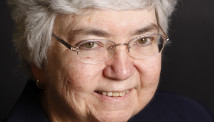
Sister Mary Ann Walsh

Sister Mary Ann Walsh


His acceptance of frailty speaks realistically about humanity: We grow old, weaken, and eventually die. A job, even one guided by the Holy Spirit, as we Roman Catholics believe, can become too much for us.


Acceptance of human frailty has marked this papacy. We all make mistakes, but the pope makes them on a huge stage.


He was barely into his papacy, for example, when he visited Regensburg, Germany, where he once taught theology. Like many a professor, he offered a provocative statement to get the conversation going. To introduce the theme of his lecture, the pope quoted from an account of a dialogue between the Byzantine Emperor Manuel II Paleologus and an unnamed Muslim scholar, sometime near the end of the 14th century -- a quote that was misinterpreted by some as a condemnation of Mohammed and Islam.


Opinion: 'Gay lobby' behind pope's resignation? Not likely


Twice, the pope emphasized that he was quoting someone else's words. Unfortunately, the statement about Islam was taken as insult, not a discussion opener, and sparked rage throughout the Muslim world.


The startled pope had to explain himself. He apologized and traveled two months later to Istanbul's Blue Mosque, where he stood shoeless in prayer beside the Grand Mufti of Istanbul. Later he hosted Muslim leaders at the Vatican at the start of a Catholic-Muslim forum for dialogue. It was a human moment -- a mistake, an apology and atonement -- all round.


A similar controversy erupted when he tried to bring the schismatic Society of St. Pius X back into the Roman Catholic fold.


In a grand gesture toward reconciliation, he lifted the excommunication of four of its bishops, unaware that one, Richard Williamson, was a Holocaust denier. This outraged many Jews. Subsequently the Vatican said the bishop had not been vetted, and in a bow to modernity said officials at least should have looked him up on the Internet.


In humble response, Benedict reiterated his condemnation of anti-Semitism and told Williamson that he must recant his Holocaust views to be fully reinstated. Again, his admission of a mistake and an effort to mend fences.


News: Scandal threatens to overshadow pope's final days


Pope Benedict XVI came from a Catholic Bavarian town. Childhood family jaunts included trips to the shrine of the Black Madonna, Our Lady of Altotting. He entered the seminary at the age of 13. He became a priest, scholar and theologian. He lived his life in service to the church. Even in resigning from the papacy, he embraces the monastic life to pray for a church he has ever loved.


With hindsight, his visit to the tomb of 13th century Pope Celestine V, a Benedictine monk who resigned from the papacy eight centuries before, becomes poignant.


In 2009, on a visit to Aquila, Italy, Benedict left at Celestine's tomb the pallium, a stole-like vestment that signifies episcopal authority, that Benedict had worn for his installation as pope. The gesture takes on more meaning as the monkish Benedict steps down.


We expect the pope to be perfect. Catholics hold him to be the vicar of Christ on earth. He stands as a spiritual leader for much of the world. Statesmen visit him from around the globe. He lives among splendid architecture, in the shadow of the domed St. Peter's Basilica. All testify to an almost surreal omnipotence.


Complete coverage of the pope's resignation


In this world, however, walked a vulnerable, human person. And in a paradox of life, his most human moment -- giving up the power of office -- may prove to be his most potent, delivering a message that, as St. Paul noted many centuries ago, "Power is made perfect in infirmity."


Follow @CNNOpinion on Twitter.


Join us at Facebook/CNNOpinion.


The opinions expressed in this commentary are solely those of Mary Ann Walsh.


Read More..

Chicago archdiocese laying off 10 percent of work force


The Roman Catholic Archdiocese of Chicago is laying off about 10 percent of its work force and is planning to close or consolidate about five schools to reverse "unsustainable" deficits.

The downsizing, which apparently has been in the works for months, coincides with the arrival of Cardinal Francis George in Rome this week to participate in the conclave to choose a new pope.


In a lengthy letter to parishioners posted on the archdiocese website, George outlines cost-cutting measures for the archdiocese, which has been running operating deficits of more than $30 million every year for the past four years.


"Since this trend is unsustainable, I want to set out the measures we are taking to ensure prudent stewardship of our resources for years to come," George says in the letter.


At the Pastoral Center, 75 positions have been cut, including 55 full-time roles. That reduction is estimated to save $11 million to $13 million annually by fiscal year 2015, according to George.

“Our employees are faith-filled men and women who have worked tirelessly for the good of the Church.  Please keep them in your prayers,” he wrote.


George wrote in his Cardinal’s Column that other cost-cutting measures would include closing or consolidating “a few schools that are no longer sustainable.”

About five schools will be closed or consolidated, some of which have seen demographic changes or other challenges, according to the letter. The Archdiocese plans to give out scholarships to children affected by the change so they can attend nearby Catholic schools.

The Archdiocese will also reduce its annual aid to schools by $10 million next year. “We hope to return to a sustainable level of aid for those schools that will always be facing financial difficulties,” George wrote.

In addition, pastors received letters in the past month informing them there would be no more loans granted from the archdiocese bank.

No parish priests will lose their assignments in the downsizing, the Tribune has learned. But administrative staff at the pastoral center could be cut.

Earlier this year, the school system rolled out a strategic plan to make schools more self-sufficient.


"This review of archdiocesan finances has been necessary but difficult," the cardinal concludes in his letter. "Reductions in some services and in staffing will, of course, be particularly difficult for the persons and parishes directly affected by them.  These actions are being taken now because the financial situation imposes them.  We are also taking them, however, so that the archdiocese will have the resources she needs for her mission."


mbrachear@tribune.com


Read More..

Iran upbeat on nuclear talks, West still wary


ALMATY (Reuters) - Iran was upbeat on Wednesday after talks with world powers about its nuclear work ended with an agreement to meet again, but Western officials said it had yet to take concrete steps to ease their fears of a secret weapons program.


The United States, China, France, Russia, Britain and Germany offered to ease sanctions slightly in return for Iran curbing its most sensitive work, but had made clear they expected no breakthrough in the talks in Kazakhstan, the first in eight months.


U.S. Secretary of State John Kerry said the talks had been "useful" and that a serious engagement by Iran could lead to a comprehensive deal in a decade-old dispute that has threatened to trigger a new Middle East war.


Iran's foreign minister said in Vienna he was "very confident" a deal could be reached and its chief negotiator said he believed the Almaty meeting could be a "turning point".


The two sides agreed to hold expert-level talks in Istanbul on March 18 to discuss the offer, and return to Almaty for political discussions on April 5-6, when Western diplomats made clear they wanted to see substantive movement by Iran.


"Iran knows what it needs to do, the president has made clear his determination to implement his policy that Iran will not have a nuclear weapon," Kerry said in Paris.


A senior U.S. official in Almaty added: "What we care about at the end is concrete results."


ISRAELI WARNING


Israel, assumed to be the Middle East's only nuclear-armed power, was watching the talks closely. It has strongly hinted it might attack Iran if diplomacy and sanctions fail to ensure that it cannot build a nuclear weapon. Iran denies any such aim.


Israeli Prime Minister Benjamin Netanyahu said economic sanctions were failing and urged the international community to threaten Iran with military action.


Western officials said the offer presented by the six powers included an easing of a ban on trade in gold and other precious metals, and a relaxation of an import embargo on Iranian petrochemical products. They gave no further details.


In exchange, a senior U.S. official said, Iran would among other things have to suspend uranium enrichment to a fissile concentration of 20 percent at its Fordow underground facility and "constrain the ability to quickly resume operations there".


This appeared to be a softening of a previous demand that Iran ship out its entire stockpile of higher-grade enriched uranium, which it says it needs to produce medical isotopes.


Iran says it has a sovereign right to enrich uranium for peaceful purposes, and wants to fuel nuclear power plants so that it can export more oil.


But 20-percent purity is far higher than that needed for nuclear power, and rings alarm bells abroad because it is only a short technical step away from weapons-grade.


Iran's growing stockpile of 20-percent-enriched uranium is already more than half-way to a "red line" that Israel has made clear it would consider sufficient for a bomb.


ELECTION LOOMING


The U.S. official said the latest proposal would "significantly restrict the accumulation of near-20-percent enriched uranium in Iran, while enabling the Iranians to produce sufficient fuel" for their Tehran medical reactor.


Iran had previously indicated that 20-percent enrichment was up for negotiation if it received the fuel from abroad instead.


Chief negotiator Saeed Jalili suggested Iran could discuss the issue, although he appeared to rule out shutting down Fordow. He said the powers had not made that specific demand.


Western officials were aware that the closeness of Iran's presidential election in June is raising political tensions in Tehran and made rapid progress unlikely.


One diplomat in Almaty said the Iranians appeared to be suggesting at the negotiations that they were opening new avenues, but that it was not clear if this was really the case.


"Everyone is saying Iran was more positive and portrayed the talks as a win," said Iran expert Dina Esfandiary of the International Institute for Strategic Studies. "I reckon the reason for that is that they are saving face internally while buying time with the West until after the elections."


The Iranian rial, which has lost more than half its foreign exchange value in the last year as sanctions bite, rose some 2 percent on Wednesday, currency tracking web sites reported.


(Additional reporting by Fredrik Dahl in Almaty, Georgina Prodhan in Vienna, Zahra Hosseinian in Zurich, Gabriela Baczynska in Moscow, Dan Williams in Jerusalem and Marcus George in Dubai; Writing by Timothy Heritage and Fredrik Dahl; Editing by Kevin Liffey)


Read More..

Wall Street up as Bernanke defends policy, warns on cuts

NEW YORK (Reuters) - Stocks advanced on Tuesday after Federal Reserve Chairman Ben Bernanke defended the Fed's bond-buying stimulus before Congress, but he warned forced spending cuts that could be triggered this week represented a headwind for the economy.


Gains in homebuilders and other consumer stocks, following strong economic data, kept the S&P 500 up slightly and a 5 percent jump in Home Depot lifted the Dow industrials. The PHLX housing sector index <.hgx> rose 2.6 percent.


Stocks hit session highs shortly after Bernanke, in testimony before the Senate Banking Committee, strongly defended the Fed's bond-buying stimulus program that has been essential for the stock market's recovery.


However, he also urged lawmakers to avoid sharp spending cuts set to go into effect on Friday, which he warned could combine with earlier tax increases to create a "significant headwind" for the economic recovery.


Bernanke's cautiousness was behind a late morning pullback in stocks, according to Robert Pavlik, chief market strategist at Banyan Partners LLC in New York.


He also said concerns about the Fed's next move are unjustified for the moment.


"The Fed isn't going to be pulling back monetary stimulus any time soon," Pavlik said.


The Dow Jones industrial average <.dji> rose 92.07 points or 0.67 percent to 13,876.24. The S&P 500 <.spx> gained 4.67 points or 0.31 percent to 1,492.52. The Nasdaq Composite <.ixic> added 1.44 points or 0.05 percent to 3,117.69.


The S&P 500 failed to move above 1,500, a closely watched level that was technical support until recently, but could now become a hurdle.


Cable network AMC Networks was among the Nasdaq's biggest percentage decliners after the home of popular shows such as "The Walking Dead" and "Mad Men" reported a quarterly profit way below analysts' estimates. Its stock fell 6.7 percent to $54.19.


Equities continued to be weighed by concerns about a stalemate in Italy after a general election failed to give any party a parliamentary majority, posing the threat of prolonged instability and financial crisis in Europe.


The FTSEurofirst-300 index of top European shares <.fteu3> closed down 1.4 percent. The benchmark Italian index <.ftmib> tumbled 4.9 percent.


Dow component Home Depot was the top gainer in both the Dow and the S&P 500 after the world's largest home improvement chain reported adjusted earnings and sales that beat expectations. Its shares jumped 5.5 percent to $67.43.


Macy's shares climbed 3.5 percent to $39.87 after the department-store chain stated it expects full-year earnings to be above analysts' forecasts because of strong holiday sales.


Economic reports that showed strength in housing and consumer confidence also supported stocks. U.S. home prices rose more than expected in December, according to the S&P/Case-Shiller index. Consumer confidence rebounded in February, jumping more than expected, and new-home sales rose to their highest in 4-1/2 years.


(Reporting by Rodrigo Campos; Additional reporting by Sam Forgione; Editing by Jan Paschal)


Read More..

Marlins owner says he didn't renege on promises


JUPITER, Fla. (AP) — A cluster of media stood outside the Miami Marlins clubhouse, awaiting the arrival of owner Jeffrey Loria, when outfielder Bryan Petersen walked past.


"Somebody getting married?" Petersen said.


It was more like somebody trying to salvage a relationship. Loria's three-day public relations campaign to patch things up with angry fans brought him to spring training Tuesday for an interview session that included several testy exchanges before the owner cut it short.


Loria reiterated many of his previous comments regarding the 2012 payroll purge, saying it wasn't about money but about improving the farm system. Ten minutes into the news conference, he bristled when asked why fans should believe him.


"You've said that question in four different ways," Loria said. "My response to you is we have put together some championship-caliber players. We're going to field an excellent team in the next two or three years that you're going to be proud of."


Fans are upset that after only one season of big spending in a new ballpark built mostly with tax money, the Marlins have reverted to their tight budgets of the past. Loria was asked about trying to change the impression the ballpark project was "a con job."


"A con job? I'm not even going to answer that," Loria said.


Many project the Marlins to lose 100 games only a year after they were the talk of baseball and touted as playoff contenders. This year's payroll is expected to be less than $45 million, compared with $90 million in 2012.


Loria denied he reneged on any promise, noting the Marlins finished last in the NL East with their biggest payroll ever.


"I fulfilled my promise in the new ballpark last year," he said. "It didn't work. So what do you do? Go back again and lose more games? We needed to do something to beef up the organization."


A blockbuster trade in November sent to Toronto three of the Marlins' highest-paid players — shortstop Jose Reyes and pitchers Mark Buehrle and Josh Johnson. In exchange Miami acquired mostly prospects.


"We have some very exciting young players here," Loria said. "We need to bring them along and develop our own stars, or else we're going to be a last-place team forever."


As he stepped away from the TV cameras after 15 minutes, a PR aide said the owner would take more questions. Instead, Loria disappeared through a clubhouse door and didn't return.


At some point the team's play will have to speak for itself.


Read More..

Benedict: Pope aware of his flaws?


Pope Benedict XVI delivers his last Angelus Blessing to thousands of pilgrims gathered in Saint Peter's Square on February 24.


STORY HIGHLIGHTS


  • Sister Mary Ann Walsh: Pope Benedict acknowledged that he made mistakes

  • Walsh: In firestorm over scholarly quotes about Islam, he went to great lengths to atone

  • Walsh: Similarly, he quickly reversed a decision that had angered Jews and repaired ties

  • Even his stepping down is a nod to his humanity and his love of the church, she says


Editor's note: Sister Mary Ann Walsh is director of media relations for the U.S. Conference of Catholic Bishops and a member of the Sisters of Mercy of the Americas Northeast Regional Community. She is a former foreign correspondent at Catholic News Service (CNS) in Rome and the editor of "John Paul II: A Light for the World," "Benedict XVI: Essays and Reflections on his Papacy," and "From Pope John Paul II to Benedict XVI."


(CNN) -- One of the Bible's paradoxical statements comes from St. Paul's Epistle to the Galatians: "Power is made perfect in infirmity."


The poetic statement proclaims that when we are weak, we are strong. Pope Benedict XVI's stepping down from what many consider one of the most powerful positions in the world proves it. In a position associated with infallibility -- though that refers to formal proclamations on faith and morals -- the pope declares his weakness.


Sister Mary Ann Walsh

Sister Mary Ann Walsh


His acceptance of frailty speaks realistically about humanity: We grow old, weaken, and eventually die. A job, even one guided by the Holy Spirit, as we Roman Catholics believe, can become too much for us.


Acceptance of human frailty has marked this papacy. We all make mistakes, but the pope makes them on a huge stage.


He was barely into his papacy, for example, when he visited Regensburg, Germany, where he once taught theology. Like many a professor, he offered a provocative statement to get the conversation going. To introduce the theme of his lecture, the pope quoted from an account of a dialogue between the Byzantine Emperor Manuel II Paleologus and an unnamed Muslim scholar, sometime near the end of the 14th century -- a quote that was misinterpreted by some as a condemnation of Mohammed and Islam.


Opinion: 'Gay lobby' behind pope's resignation? Not likely


Twice, the pope emphasized that he was quoting someone else's words. Unfortunately, the statement about Islam was taken as insult, not a discussion opener, and sparked rage throughout the Muslim world.


The startled pope had to explain himself. He apologized and traveled two months later to Istanbul's Blue Mosque, where he stood shoeless in prayer beside the Grand Mufti of Istanbul. Later he hosted Muslim leaders at the Vatican at the start of a Catholic-Muslim forum for dialogue. It was a human moment -- a mistake, an apology and atonement -- all round.


A similar controversy erupted when he tried to bring the schismatic Society of St. Pius X back into the Roman Catholic fold.


In a grand gesture toward reconciliation, he lifted the excommunication of four of its bishops, unaware that one, Richard Williamson, was a Holocaust denier. This outraged many Jews. Subsequently the Vatican said the bishop had not been vetted, and in a bow to modernity said officials at least should have looked him up on the Internet.


In humble response, Benedict reiterated his condemnation of anti-Semitism and told Williamson that he must recant his Holocaust views to be fully reinstated. Again, his admission of a mistake and an effort to mend fences.


News: Scandal threatens to overshadow pope's final days


Pope Benedict XVI came from a Catholic Bavarian town. Childhood family jaunts included trips to the shrine of the Black Madonna, Our Lady of Altotting. He entered the seminary at the age of 13. He became a priest, scholar and theologian. He lived his life in service to the church. Even in resigning from the papacy, he embraces the monastic life to pray for a church he has ever loved.


With hindsight, his visit to the tomb of 13th century Pope Celestine V, a Benedictine monk who resigned from the papacy eight centuries before, becomes poignant.


In 2009, on a visit to Aquila, Italy, Benedict left at Celestine's tomb the pallium, a stole-like vestment that signifies episcopal authority, that Benedict had worn for his installation as pope. The gesture takes on more meaning as the monkish Benedict steps down.


We expect the pope to be perfect. Catholics hold him to be the vicar of Christ on earth. He stands as a spiritual leader for much of the world. Statesmen visit him from around the globe. He lives among splendid architecture, in the shadow of the domed St. Peter's Basilica. All testify to an almost surreal omnipotence.


Complete coverage of the pope's resignation


In this world, however, walked a vulnerable, human person. And in a paradox of life, his most human moment -- giving up the power of office -- may prove to be his most potent, delivering a message that, as St. Paul noted many centuries ago, "Power is made perfect in infirmity."


Follow @CNNOpinion on Twitter.


Join us at Facebook/CNNOpinion.


The opinions expressed in this commentary are solely those of Mary Ann Walsh.


Read More..

Chicago pelted by snow, sleet


A winter weather advisory has been issued for today as the Chicago area is getting hit with sleet, freezing rain and snow from a storm that churned the southern Plains a day earlier.


The National Weather Service expects snow  to fall the heaviest between mid-day and early afternoon, though accumulations will vary in different parts the city.


"It does look like the early part of the rush hour will be most affected," said Mike Bardou, a Romeoville-based meteorologist for The National Weather Service.


The northern part of the city and the northwest suburbs could see 2 to 3 inches of snow by the evening rush hour, he said.


During a similar time frame, Chicago's South Side and southwest suburbs like Oak Lawn, Tinley Park and Joliet might only get 1 to 2 inches of snow, according to the agency. The far south suburbs could see less than an inch.


Snow will continue to fall, though at a lighter intensity, through the evening until early tomorrow morning, according to the agency, and temperatures are expected to hover right around freezing.


So far, the early mixture of rain, sleetr and snow has resulted in non-serious accidents on Interstate 90, I-94 and I-55, according to the Illinois State Police.


The threat of heavy weather has already prompted a large number of schools to cancel after-school activities, according to the Emergency Closing Center on ChicagoWeatherCenter.com, and many are even closing early.

The weather has also thrown a monkey wrench into scheduling of early-round games in the boys state basketball tournaments. Many games downstate have been postponed for a day and in the Chicago area, games at Chicago's St. Ignatius College Prep and at South Elgin High School have  been postponed as well.


The storm bore down on the southern Plains on Monday, dumping more than a foot of snow and creating blizzard conditions in Oklahoma, Texas and parts of Kansas still digging out from a winter storm last week.


Highways in the Texas and Oklahoma panhandles and parts of Kansas were closed by the heavy and drifting snow that cut visibility and forced flight cancellations at airports across the region.


A man was killed Monday when his car slid off Interstate 70 in Sherman County, Kansas, near the western border, Governor Sam Brownback said. And in northern Oklahoma, one person died when the roof of a home partially collapsed in the city of Woodward, said Matt Lehenbauer, the city's emergency management director.


"We have roofs collapsing all over town," said Woodward Mayor Roscoe Hill Jr. "We really have a mess on our hands."


The storm was slowly moving out of Texas on Monday, while residents of Kansas City in turn were preparing for a foot or more of snow into Tuesday.


Tornado watches were in place Monday evening in parts of Mississippi and heavy rain was expected through the night in parts of Alabama and Georgia, according to the National Weather Service. The weather service Monday also issued flood watches for parts of the Carolinas and an ice storm warning for portions of West Virginia.


Some 17 inches of snow fell near Amarillo, Texas, according to the National Weather Service. Other areas in the Texas Panhandle reported more than a foot of snow and Texas Governor Rick Perry activated Texas military forces to be ready to respond to calls for assistance.


Amarillo could break the all-time record for the amount of snow in one day of just over 18 inches set in 1934, said Kristin Scotten of the National Weather Service.


Airports in Amarillo and in Lubbock, Texas, were closed and Interstate 27 between the cities was shut because of blowing snow, state officials said. Wind gusts of 75 miles per hour (121 km per hour) were clocked at the Amarillo airport.


Visibility was near zero on some roads around Amarillo, said Paul Braun, a Texas Department of Transportation spokesman.


"I am hearing that we have a lot of vehicles that are stalled in the main lanes of our roadways and they can't be seen because of the blowing snow," Braun said.


Texas State Trooper Gabriel Medrano said the snow was too deep to measure in Lubbock.


Read More..

Italy parties seek way out of election stalemate


ROME (Reuters) - Italy's stunned political parties looked for a way forward on Tuesday after an election that gave none of them a parliamentary majority, posing the threat of prolonged instability and European financial crisis.


The results, notably by the dramatic surge of the anti-establishment 5-Star Movement of comic Beppe Grillo, left the center-left bloc with a majority in the lower house but without the numbers to control the powerful upper chamber, the Senate.


Financial markets fell sharply at the prospect of a stalemate that reawakened memories of the crisis that pushed Italy's borrowing costs toward unsustainably high levels and brought the euro zone to the brink of collapse in 2011.


"The winner is: Ingovernability," ran the headline in Rome newspaper Il Messaggero, reflecting the deadlock the country will have to confront in the next few weeks as sworn enemies are forced to work together to form a government.


Pier Luigi Bersani, head of the center-left Democratic Party (PD), has the difficult task of trying to agree a "grand coalition" with former prime minister Silvio Berlusconi, the man he blames for ruining Italy, or striking a deal with Grillo, a completely unknown quantity in conventional politics.


The alternative is new elections either immediately or within a few months, although both Berlusconi and Bersani have indicated that they want to avoid a return to the polls if possible: "Italy cannot be ungoverned and we have to reflect," Berlusconi said in an interview on his own television station.


For his part, Grillo, whose "non-party" movement won the most votes of any single party, has indicated that he believes the next government will last no more than six months.


"They won't be able to govern," he told reporters on Tuesday. "Whether I'm there or not, they won't be able govern."


He said he would work with anyone who supported his policy proposals, which range from anti-corruption measures to green-tinted energy measures but rejected suggestions of entering a formal coalition: "It's not time to talk of alliances... the system has already fallen," he said.


The election, a massive rejection of the austerity policies applied by Prime Minister Mario Monti with the backing of international leaders from U.S. President Barack Obama to German Chancellor Angela Merkel, caused consternation across Europe.


"This is a jump to nowhere that does not bode well either for Italy or Europe," said Spanish Foreign Minister Jose Manuel Garcia-Margallo.


In a sign of worry at the top over what effect the elections could have on the economy, Monti, whose austerity policies were repudiated by voters who shunned his centrist bloc, met the governor of the central bank, the economy minister and the European affairs minister to discuss the situation on Tuesday.


The former EU commissioner and his team of technocrats, who were brought in to govern when Berlusconi was consumed by crisis and scandal, will stay on until a new administration is formed.


UNTHINKABLE WITHOUT GRILLO


Projections for the Senate by the Italian Centre for Electoral Studies indicated that the center-left would have 121 seats, against 117 for the center-right alliance of Berlusconi's PDL and the regionalist Northern League. Grillo would take 54.


That leaves no party with the majority in a chamber which a government must control to pass legislation and opened up the prospect of previously inconceivable partnerships that will test the sometimes fragile internal unity of the main parties.


"The idea of a majority without Grillo is unthinkable. I don't know if anyone in the PD is considering it but I'm against it," said Matteo Orfini, a member of Bersani's PD secretariat.


"The idea of a PD-PDL government, even if it's backed by Monti, doesn't make any sense," he said.


Berlusconi, a media magnate whose campaigning all but wiped out Bersani's once commanding opinion poll lead, hinted in a telephone call to a morning television show that he would be open to a deal with the center-left - but not with Monti, the economics professor who replaced him 15 months ago.


"Italy must be governed," Berlusconi said, adding that he "must reflect" on a possible deal with the center-left. "Everyone must be prepared to make sacrifices," he said of the groups which now have a share of the legislature.


The Milan bourse was down almost 4 percent and the premium Italy pays over Germany to borrow on 10-year widened to a yield spread of 338 basis points, the highest since December 10 and more than 80 points above the level seen earlier on Monday.


At an auction of six-month Treasury bills, Italy's borrowing costs jumped by more than two thirds with the yield reaching 1.237 percent, the highest since October and compared to just 0.730 percent in a similar sale a month ago.


The euro dropped to an almost seven-week low against the dollar in Asia on fears of a revival of the euro zone crisis. It fell as far as $1.3042, its lowest since January 10.


"What is crucial now is that a stable functioning government can be built as swiftly as possible," said German Foreign Minister Guido Westerwelle. "This is not only in the interests of Italy but in the interests of all Europe."


However the view from some voters, weary of the mainstream parties, was unrepentant: "It's good," said Roger Manica, 28, a security guard in Rome, who voted for the center-left PD.


"Next time I'll vote 5-Star. I like that they are changing things, even if it means uncertainty. Uncertainty doesn't matter to me, for me what's important is a good person who gets things done," he said. "Look how well they've done."


A long recession and growing disillusionment with mainstream parties and tax-raising austerity fed the bitter public mood and contributed to the massive rejection of Monti, whose centrist coalition was relegated to the sidelines.


Berlusconi's campaign, mixing sweeping tax cut pledges with relentless attacks on Monti and Merkel, echoed many of the themes pushed by Grillo and underlined the increasingly angry mood of the Italian electorate.


But even if the next government turns away from the tax hikes and spending cuts brought in by Monti, it will struggle to revive an economy that has scarcely grown in two decades.


Monti was widely credited with tightening Italy's public finances and restoring its international credibility after the scandal-plagued Berlusconi, who is currently on trial for having sex with an under-age prostitute.


However he struggled to pass the kind of structural reforms needed to improve competitiveness and lay the foundations for a return to economic growth. A weak center-left government may not find it any easier.


For Italian business, with an illustrious history of export success, the election result brought dismay that there would be no quick change to what they see as a regulatory sclerosis that has kept the economy virtually stagnant for a decade.


"This is probably the worst possible scenario," said Francesco Divella, whose family began selling pasta under its eponymous brand in 1890 in the southern region of Puglia.


"We are very concerned about the uncertainty and apparent ungovernability," said Silvio Pietro Angori, chief executive of Pininfarina, which has designed Ferrari sportscars since 1950. "A company competing on the global markets like Pininfarina needs the support of a stable government that inspires trust."


One of the country's leading bankers summed up his personal reaction: "I'm in shock," he told Reuters. "What a mess!"


(Additional reporting by Barry Moody, Gavin Jones, Lisa Jucca, Steven Jewkes, Steve Scherer Writing by Philip Pullella and James Mackenzie; Editing by Alastair Macdonald)


Read More..

Indiana stays No. 1 in AP Top 25, Gonzaga No. 2


Indiana is No. 1 in The Associated Press' Top 25 for the fourth straight week, while Gonzaga moved to No. 2 for the first time in school history.


The Bulldogs were third last week, matching their previous best ranking.


"The polls mean a lot more this time of year than they do in November, December, even January," coach Mark Few said. "All of us are being judged on the true body of work. It's definitely rewarding.


"It establishes us as a national program, which I believe we have been for the last 10 years. This group has done a great job of competing at that level, winning games at the highest level."


While the West Coast Bulldogs made some news at the top of the poll Monday, Louisiana Tech, the Bulldogs from Down South, moved into the rankings for the first time since a 13-week run in 1984-85, their only appearance in the poll.


Louisiana Tech, which is 25th this week, was led back then to a ranking as high as No. 7 by a forward named Karl Malone. Gonzaga at that time had a point guard named John Stockton. They went on to become one of the greatest combinations in NBA history with the Utah Jazz, were members of the Dream Team and both were inducted in the Naismith Memorial Basketball Hall of Fame.


The Hoosiers, who have been ranked No. 1 for a total of 10 weeks this season, received all but one first-place vote from the 65-member national media panel.


Gonzaga, which got the other No. 1 vote, was ranked third for the final two weeks of 2003-04.


Duke moved up three spots to third and is followed by Michigan and Miami, which dropped from second after falling to Wake Forest, the Hurricanes' first Atlantic Coast Conference loss this season.


Kansas is sixth, followed by Georgetown, Florida, Michigan State and Louisville.


Saint Louis, which beat Butler and VCU last week, moved into 18th in the poll, the Billikens' first ranking since being in for one week last season.


Colorado State, which was 22nd and lost twice last week, and VCU, which was 24th, dropped out.


Read More..

Iran plans own response to 'Argo'


(File photo) Argo tells the story of a rescue of U.S. diplomats from revolutionary Iran.


STORY HIGHLIGHTS


  • Ben Affleck's "Argo" tells the story of a dramatic rescue of U.S. diplomats from revolutionary Iran

  • Iranian state media criticize the movie as "replete with historical inaccuracies and distortions"

  • Iran's Art Bureau says it will fund its own film about the handing over of 20 U.S. hostages


(CNN) -- Ben Affleck has more than just a couple of Golden Globes to add to his resume.


His movie "Argo," about the suspenseful rescue of U.S. diplomats during the Iran hostage crisis, has also achieved the unusual honor of prompting Tehran to produce its own cinematic response.


Opinion: Latino should have played lead in 'Argo'


"Argo" was named best drama movie during the Golden Globes ceremony on Sunday night in Los Angeles, and Affleck won the award for best director, a category for which he was passed over in the recent Oscar nominations.


But his efforts to recreate on screen the drama of the secret operation by the CIA and Canada to extract six U.S. embassy workers from revolutionary Iran in 1980 haven't been overlooked by Tehran's Art Bureau.


'Argo' recognizes forgotten heroes of Iran hostage saga


It plans to fund a movie entitled "The General Staff," about 20 American hostages who were handed over to the United States by Iranian revolutionaries, according to a report last week by Mehr News, the official Iranian agency.


"This film, which will be a big production, should be an appropriate response to the ahistoric film 'Argo,'" said Ataollah Salmanian, the director of the Iranian film, according to Mehr.


"Argo" claims to be based on a true story rather than to constitute a scrupulous retelling of exactly what took place, and its deviations from reality have been documented.


But Iranian authorities have taken offense at the film's portrayal of the country and its people. "Argo" was officially viewed as "anti-Iranian" following its U.S. release last year, Mehr reported.


Iran's state-run broadcaster Press TV detailed its objections to the film in an online article on Sunday.


"The Iranophobic American movie attempts to describe Iranians as overemotional, irrational, insane, and diabolical while at the same, the CIA agents are represented as heroically patriotic," it complained.


In the movie, in which Affleck plays the lead role, the CIA operation is shown outwitting Iranian authorities through an elaborate plan based on pretending that the U.S. diplomats fleeing the country were part of team scouting locations for an outlandish science-fiction film.


But according to Press TV, the film is "a far cry from a balanced narration" and is "replete with historical inaccuracies and distortions."


On the other hand, "The General Staff," set to begin shooting next year, will be based on eyewitness accounts, Salmanian said.


The Art Bureau, which is to provide the financing, is affiliated with the Islamic Ideology Dissemination Organization, according to Mehr.


Press TV cited Salmanian as saying that his film would depict "the historical event unlike the American version which lacks a proper view of the story."


CNN's Samira Said contributed to this report.


Read More..

New storm to hit Chicago area on Tuesday: forecasts


For the second time in less than a week, the Chicago area is in line for a snowstorm that promises a mixture of freezing rain, sleet and snow with enough accumulation to bring out the snow shovels.


Early predictions from the National Weather Service pegged the potential snowfall at about 3-6 inches, about what the storm left the end of last week. But the weather service says it's still unclear which areas will be hit with what: If the temperature is above freezing, there will be less snow, and if it's below, there will be more.


The weather service has issued a winter storm watch from Tuesday morning through the evening.


The weather service said the snow will start sometime after midnight Tuesday morning, with freezing rain turning to sleet to wet snow by early afternoon. With winds gusting about 35 mph, some of that snow will drift and made Tuesday a bad day on the roads.


The track of the storm is over the Texas panhandle northeast and through Missouri and southern Illinois and central Indiana, the Lake Erie area early Wednesday. North of the low pressure path, winter storm watches are in effect from late Monday through Tuesday from Missouri through northern Illinois, the southeastern corner of Wisconsin, extreme northern Indiana and much of Lower Michigan.

In the Chicago area, there could be heavy snow of 6 inches or more Tuesday generally north of Interstate 80, with northeast winds at 25 to 35 mph whipping and blowing the snow, according to the Chicago Weather Center.


Rain, a period of freezing rain and sleet will spread north out of central Illinois early Tuesday, changing over to a heavy wet snow in the Chicago metro area and across the far west through north suburbs into southern Wisconsin.

A combination of freezing rain, sleet and snow will cause hazardous driving across northern Indiana Tuesday. The precipitation will be all snow across Illinois later Tuesday.


According to the Chicago Weather Center, February has been an unusually snowy month during a winter that has been unusually snowless. Through Saturday, there has been 10.1 inches of snow, about 136 percent of normal, while the winter's total has been 13.6 inches, way below normal.


Plains states hit again


A storm struck parts of the southern Plains today, creating blizzard conditions in Oklahoma and Texas and warnings in Kansas and Missouri that caught the brunt of a winter storm last week.

Snow fell at the rate of up to 2 inches per hour in the Amarillo, Texas, area, and the National Weather Service warned against travel, saying "most roads are impassable."

Airports in Amarillo and 120 miles to the south in Lubbock, Texas, were closed while Interstate 27 between the cities was shut down because of the blowing snow, state officials said.

Amarillo and parts north of Amarillo in the panhandle reported a foot of snow or more on Monday morning.

Parts of northwestern Oklahoma could get 16 inches to 24 inches of snow, with high winds that could create drifts up to 6 feet high, according to the National Weather Service in Norman, Oklahoma.

The Oklahoma Highway Patrol said it closed all highways in the Oklahoma panhandle because of blizzard conditions. Interstate 40 in the Texas panhandle was also closed, according to National Weather Service in Amarillo.

In Oklahoma City, some afternoon flights from Will Rogers World Airport were canceled in anticipation of the storm.

Kansas, hit by a foot or more of snow in spots last week, braced for possible worsening conditions on Monday and Tuesday.

Reuters contributed


chicagobreaking@tribune.com


Twitter: @ChicagoBreaking


Read More..

Italy election forecasts point to political gridlock


ROME (Reuters) - Conflicting early forecasts of the result of Italy's election on Monday raised the specter of deadlock in parliament that could paralyze a new government and re-ignite the euro zone crisis.


Officials from both centre and left warned that such gridlock could make Italy ungovernable and force new elections.


Opinion polls have long pointed to the center-left of Pier Luigi Bersani winning the lower house, but projections from RAI state television showed Silvio Berlusconi's center right in front in the Senate - which has equal lawmaking power - but unable to form a majority.


RAI showed the center-left well short of a majority in the Senate even in coalition with Monti, who was seen slumping to only 19 out of 315 elected Senators against a massive 65 for the anti-establishment 5-Star Movement of comedian Beppe Grillo.


Senate votes are counted before the lower house.


The latest projections ran counter to earlier telephone polls that showed the center left taking a strong lead in the Senate as well as the lower house.


Italian financial markets took fright after rising earlier on hopes for a stable and strong center-left led government, probably backed by outgoing technocrat premier Mario Monti.


Such government is seen by investors as the best guarantee of measures to combat a deep recession and stagnant growth in the euro zone's third largest economy, which is pivotal to stability in the currency union.


Berlusconi's declared aim is to win enough power in the Senate to paralyze a center-left administration.


The benchmark spread between Italian 10-year bonds and their German equivalent widened from below 260 basis points to above 280 and the Italian share index lost all its previous gains.


"These projections suggest that we are heading for an ungovernable situation", said Mario Secchi, a candidate for Monti's centrist movement.


Stefano Fassina, chief economic official for Bersani's center-left, said: "The scenario from the projections we have seen so far suggest there will be no stable government and we would need to return to the polls."


The earlier telephone polls on Sky and Rai television after voting ended at 3 p.m. (1400 GMT/9 a.m. ET) had shown the center left 5-6 points ahead of the center right in both Senate and lower house, with Grillo taking third place.


Adding to the confusion, official results from more than 50 percent of polling stations showed the center-left ahead with 32.7 percent against 29.5 for the center-right in the Senate race. The partial official count is often not representative because of the order in which votes are counted regionally.


Italy's electoral laws guarantee a strong majority in the lower house to the party or coalition that wins the biggest share of the national vote.


However the Senate, elected on a region-by-region basis, is more complicated and the result will turn on four key battleground regions. Projections from LA 7 showed Berlusconi winning in three of them: Lombardy, Sicily and Campania.


A Sky television projection showed him strongly ahead in the rich northern region Lombardy, which returns the largest number of Senators, with 38.8 percent against 27.6 for the center left.


BITTER CAMPAIGN


A bitter campaign, fought largely over economic issues, has made some investors fear a return of the kind of debt crisis that took the euro zone close to disaster and brought the technocrat Monti to office, replacing the scandal-plagued Berlusconi, in 2011.


Monti helped save Italy from a debt crisis when Rome's borrowing costs were spiraling out of control, but the polls and projections suggested few Italians now see him as the savior of the country, in its longest recession for 20 years.


A surge in protest votes for Grillo's 5-Star Movement had raised uncertainty about the chances of a stable government that could fend off the danger of a renewed euro zone crisis.


Grillo's movement rode a huge wave of voter anger about both the pain of Monti's austerity program and a string of political and corporate scandals. It had particular appeal for a frustrated younger generation shut out of full-time jobs.


"I'm sick of the scandals and the stealing," said Paolo Gentile, a 49-year-old Rome lawyer who voted for 5-Star.


"We need some young, new people in parliament, not the old parties that are totally discredited."


Bad weather, including heavy snow in some areas, was thought to have hampered the turnout in Italy's first post-war election to be held in winter. This could have favored the center left, whose voters tend to be more committed than those on the right, which has strong support among older people.


Berlusconi, a 76-year-old media tycoon, pledged sweeping tax cuts and accused Monti of being a puppet of German Chancellor Angela Merkel in a media blitz that halved the lead of the center left in opinion polls since the start of the year.


Whatever government emerges will inherit an economy that has been stagnant for much of the past two decades and problems ranging from record youth unemployment to a dysfunctional justice system and a bloated public sector.


(Additional reporting by Stefano Bernabei, Steve Scherer, Gavin Jones and Giuseppe Fonte in Rome and Lisa Jucca in Milan; Writing by Barry Moody; Editing by Robin Pomeroy and Philippa Fletcher)


Read More..

Investors face another Washington deadline

NEW YORK (Reuters) - Investors face another Washington-imposed deadline on government spending cuts next week, but it's not generating the same level of fear as two months ago when the "fiscal cliff" loomed large.


Investors in sectors most likely to be affected by the cuts, like defense, seem untroubled that the budget talks could send stocks tumbling.


Talks on the U.S. budget crisis began again this week leading up to the March 1 deadline for the so-called sequestration when $85 billion in automatic federal spending cuts are scheduled to take effect.


"It's at this point a political hot button in Washington but a very low level investor concern," said Fred Dickson, chief market strategist at D.A. Davidson & Co. in Lake Oswego, Oregon. The fight pits President Barack Obama and fellow Democrats against congressional Republicans.


Stocks rallied in early January after a compromise temporarily avoided the fiscal cliff, and the Standard & Poor's 500 index <.spx> has risen 6.3 percent since the start of the year.


But the benchmark index lost steam this week, posting its first week of losses since the start of the year. Minutes on Wednesday from the last Federal Reserve meeting, which suggested the central bank may slow or stop its stimulus policy sooner than expected, provided the catalyst.


National elections in Italy on Sunday and Monday could also add to investor concern. Most investors expect a government headed by Pier Luigi Bersani to win and continue with reforms to tackle Italy's debt problems. However, a resurgence by former leader Silvio Berlusconi has raised doubts.


"Europe has been in the last six months less of a topic for the stock market, but the problems haven't gone away. This may bring back investor attention to that," said Kim Forrest, senior equity research analyst at Fort Pitt Capital Group in Pittsburgh.


OPTIONS BULLS TARGET GAINS


The spending cuts, if they go ahead, could hit the defense industry particularly hard.


Yet in the options market, bulls were targeting gains in Lockheed Martin Corp , the Pentagon's biggest supplier.


Calls on the stock far outpaced puts, suggesting that many investors anticipate the stock to move higher. Overall options volume on the stock was 2.8 times the daily average with 17,000 calls and 3,360 puts traded, according to options analytics firm Trade Alert.


"The upside call buying in Lockheed solidifies the idea that option investors are not pricing in a lot of downside risk in most defense stocks from the likely impact of sequestration," said Jared Woodard, a founder of research and advisory firm condoroptions.com in Forest, Virginia.


The stock ended up 0.6 percent at $88.12 on Friday.


If lawmakers fail to reach an agreement on reducing the U.S. budget deficit in the next few days, a sequester would include significant cuts in defense spending. Companies such as General Dynamics Corp and Smith & Wesson Holding Corp could be affected.


General Dynamics Corp shares rose 1.2 percent to $67.32 and Smith & Wesson added 4.6 percent to $9.18 on Friday.


EYES ON GDP DATA, APPLE


The latest data on fourth-quarter U.S. gross domestic product is expected on Thursday, and some analysts predict an upward revision following trade data that showed America's deficit shrank in December to its narrowest in nearly three years.


U.S. GDP unexpectedly contracted in the fourth quarter, according to an earlier government estimate, but analysts said there was no reason for panic, given that consumer spending and business investment picked up.


Investors will be looking for any hints of changes in the Fed's policy of monetary easing when Fed Chairman Ben Bernake speaks before congressional committees on Tuesday and Wednesday.


Shares of Apple will be watched closely next week when the company's annual stockholders' meeting is held.


On Friday, a U.S. judge handed outspoken hedge fund manager David Einhorn a victory in his battle with the iPhone maker, blocking the company from moving forward with a shareholder vote on a controversial proposal to limit the company's ability to issue preferred stock.


(Additional reporting by Doris Frankel; Editing by Kenneth Barry)


Read More..

Safety on everyone's mind before Daytona 500


DAYTONA BEACH, Fla. (AP) — Raymond Gober parked his motorcycle outside Daytona International Speedway, climbed off and briefly considered bringing his helmet into the track.


"I was about to wear it in, but I knew everyone would be laughing at me," said Gober, a pastor from outside Atlanta.


Maybe not.


Safety was on everyone's mind before the Daytona 500 on Sunday, a day after a horrific wreck in a second-tier NASCAR series race hurled chunks of debris, including a heavy tire, into the stands and injured nearly 30 people.


With small spots of blood still soaked into the concrete seating area, the accident raised questions about the safety of fans at race tracks. Should fences be higher and sturdier? Should grandstands be farther from the track?


NASCAR has long been a big draw because of its thrilling speeds, tight-knit racing, frantic finishes and the ability to get so close to the action.


That proximity comes with some risk.


And after Saturday's 12-car melee on the final lap of the Nationwide Series opener, some questioned whether that risk outweighed the reward.


"These are the best seats in the house, but they're also dangerous," Gober said.


Gober was one of thousands of fans who returned to Daytona less than 24 hours after Kyle Larson's car flew into the fence, crumbled into pieces and sprayed parts at spectators.


"You don't have time to react, but I just remember thinking, 'This is gonna hurt,'" said Steve Bradford, of Dade City. "We were showered with debris."


Gober picked up a bolt that landed next to his left foot and plans to take it home as a souvenir from a crash that could have considerably worse.


He and Bradford have been coming to races at Daytona for years, always seeking out scalped tickets so they can get ultra-close to the cars zooming by at 200 mph.


Now, though?


"Needless to say, we won't be here next year," Bradford said — meaning the seats, not the race.


He pointed at the upper level.


"Next year, we'll be up there," he said.


Not everyone felt the same way.


John and Andrea Crawford, of Streetsboro, Ohio, love sitting a few rows up. They were there Saturday and back again Sunday, just like so many in that seating section.


The area had rubber marks on seats hit by the tire. Several fans pointed out a chair bent backward, the spot one man was sitting when he got pummeled by the 60-pound tire and wheel.


"I'm not nervous," Andrea Crawford said. "It doesn't happen that much."


When Rick Barasso arrived at his seats, he noticed a few reporters and some tire marks. He asked what was going on and then couldn't stop smiling as he waved his friends over and shared details with them.


"These should be good seats," he said. "I mean, what are the chances?"


Maybe small, but there's little doubt the latest fallout could prompt NASCAR and track officials to consider changes — at Daytona and elsewhere.


Daytona has plans to remodel the grandstands. Track President Joie Chitwood said Saturday's wreck could prompt sturdier fences or stands farther from the action.


"It's tough to connect the two right now in terms of a potential redevelopment and what occurred," Chitwood said. "We were prepared yesterday, had emergency medical respond. As we learn from this, you bet: If there are things that we can incorporate into the future, whether it's the current property now or any other redevelopment, we will.


"The key is sitting down with NASCAR, finding out the things that happened and how we deal with them."


Daytona reexamined its fencing and ended up replacing the entire thing following Carl Edwards' scary crash at Talladega Superspeedway in Alabama in 2009. Edwards' car sailed into the fence and spewed debris into the stands.


"We've made improvements since then," Chitwood said. "I think that's the key: that we learn from this and figure out what else we need to do."


Three-time Indianapolis 500 winner Johnny Rutherford said Sunday that things should be done across auto racing. It was just 16 months ago that IndyCar driver Dan Wheldon was killed when his car crashed into a fence at Las Vegas.


"Maybe we need a double fence, one behind the other, with maybe a space in between to do something to stop this," Rutherford said. "There's a lot of things. I'm sure NASCAR and the IndyCar series are looking at everything to make it safer. What happened yesterday was a terrible thing.


"The drivers, we accept that. That's part of the game. We have to roll the dice and move on. But you don't want to involve the fans."


Chitwood said any fans who felt uncomfortable with their up-close seating for the Daytona 500 could exchange their tickets for spots elsewhere.


"If fans are unhappy with their seating location or if they have any incidents, we would relocate them," Chitwood said. "So we'll treat that area like we do every other area of the grandstand. If a fan is not comfortable where they're sitting, we make every accommodation we can."


Few fans seemed willing to relocate.


"Real NASCAR fans ain't scared," said Zeb Daniels, who was attending his fifth Daytona 500 with his daughter. "If we see anything coming to the fence, we'll hit the floor and pray."


So why take a chance?


"We come for the thrill, the excitement," Daniels said. "We can feel the heat, the tire rubber in our eyes."


Read More..

Vatican 'Gay lobby'? Probably not


STORY HIGHLIGHTS


  • Benedict XVI not stepping down under pressure from 'gay lobby,' Allen says

  • Allen: Benedict is a man who prefers the life of the mind to the nuts and bolts of government

  • However, he says, much of the pope's time has been spent putting out fires


Editor's note: John L. Allen Jr. is CNN's senior Vatican analyst and senior correspondent for the National Catholic Reporter.


(CNN) -- Suffice it to say that of all possible storylines to emerge, heading into the election of a new pope, sensational charges of a shadowy "gay lobby" (possibly linked to blackmail), whose occult influence may have been behind the resignation of Benedict XVI, would be right at the bottom of the Vatican's wish list.


Proof of the Vatican's irritation came with a blistering statement Saturday complaining of "unverified, unverifiable or completely false news stories," even suggesting the media is trying to influence the papal election.


Two basic questions have to be asked about all this. First, is there really a secret dossier about a network of people inside the Vatican who are linked by their sexual orientation, as Italian newspaper reports have alleged? Second, is this really why Benedict XVI quit?


John L. Allen Jr.

John L. Allen Jr.


The best answers, respectively, are "maybe" and "probably not."


It's a matter of record that at the peak of last year's massive Vatican leaks crisis, Benedict XVI created a commission of three cardinals to investigate the leaks. They submitted an eyes-only report to the pope in mid-December, which has not been made public.


It's impossible to confirm whether that report looked into the possibility that people protecting secrets about their sex lives were involved with the leaks, but frankly, it would be surprising if it didn't.


There are certainly compelling reasons to consider the hypothesis. In 2007, a Vatican official was caught by an Italian TV network on hidden camera arranging a date through a gay-oriented chat room, and then taking the young man back to his Vatican apartment. In 2010, a papal ceremonial officer was caught on a wiretap arranging liaisons through a Nigerian member of a Vatican choir. Both episodes played out in full public view, and gave the Vatican a black eye.


Pope Benedict XVI


HIDE CAPTION


<<


<


1


2


3


4


5


6


7


8


9


10


11


12


13


14


15


16


17


18


19


20


>


>>


In that context, it would be a little odd if the cardinals didn't at least consider the possibility that insiders leading a double life might be vulnerable to pressure to betray the pope's confidence. That would apply not just to sex, but also potential conflicts of other sorts too, such as financial interests.


Vatican officials have said Benedict may authorize giving the report to the 116 cardinals who will elect his successor, so they can factor it into their deliberations. The most immediate fallout is that the affair is likely to strengthen the conviction among many cardinals that the next pope has to lead a serious house-cleaning inside the Vatican's bureaucracy.


It seems a stretch, however, to suggest this is the real reason Benedict is leaving. For the most part, one should probably take the pope at his word, that old age and fatigue are the motives for his decision.


That said, it's hard not to suspect that the meltdowns and controversies that have dogged Benedict XVI for the last eight years are in the background of why he's so tired. In 2009, at the height of another frenzy surrounding the lifting of the excommunication of a Holocaust-denying traditionalist bishop, Benedict dispatched a plaintive letter to the bishops of the world, voicing hurt for the way he'd been attacked and apologizing for the Vatican's mishandling of the situation.


Even if Benedict didn't resign because of any specific crisis, including this latest one, such anguish must have taken its toll. Benedict is a teaching pope, a man who prefers the life of the mind to the nuts and bolts of government, yet an enormous share of his time and energy has been consumed trying to put out internal fires.


It's hard to know why Benedict XVI is stepping off the stage, but I doubt it is because of a "gay lobby."


Follow us on Twitter @CNNOpinion.


Join us on Facebook/CNNOpinion.


The opinions expressed in this commentary are solely those of John L. Allen Jr.


Read More..

Daytona 500 still a go despite accident that injured fans


DAYTONA BEACH, Fla. —


The Daytona 500 NASCAR race will go ahead on Sunday despite a crash on Saturday that injured more than 20 fans, questions over the safety of the famous speedway and the possibility of lawsuits.

Officials said they had repaired the fencing that was damaged after the pile-up which sent debris flying into the crowd and injuring fans on the final lap of Saturday's second-tier Nationwide race.


Halifax Health spokesman Byron Cogdell said that seven people were treated for injuries at their facility but two who had initially been listed as critical were now in a stable condition.

Another injured spectator was being treated at Florida Hospital Memorial Medical Center in Daytona Beach, but their condition was not available.

Fourteen other fans had been treated on site at the track before being released, said Daytona International Speedway president Joei Chitwood.

Chitwood said any fans in the affected area who were concerned about the safety of their seat position would be relocated.

"If fans are unhappy with...their seating location or if they have any incidents, we would relocate them. We will treat that area like we do every other of the grandstand.

"If a fan is not comfortable where they are sitting, we make every accommodation we can," he said.

NASCAR and the speedway could face millions of dollars' worth of claims from the injured, litigation that would likely center on the sturdiness of the safety fence that was supposed to keep fans from danger, according to several plaintiffs' lawyers.

"Maybe the fence should have been higher; maybe there should have been more spacing between the track and spectators," said Adam Levitt, a lawyer with Grant & Eisenhofer.

However, lawyers also said the auto-racing business would likely point to the disclaimers that it typically displays on tickets, which are designed to exempt NASCAR from any potential injury liability. They expected NASCAR would argue that fans knew what they were getting into when signing up for the race.

NEW FENCING

Both the speedway and NASCAR have said they will closely review the incident in search of any ways they could improve safety.

Chitwood said new, 22-feet-high fencing had been put in place three years ago following a review of a crash involving Colin Edwards at Talladega in 2009.

"If you look at our 55 years in the business, we have a pretty good safety track record. I think we are prepared today," said Chitwood.

However, three-times Indianapolis 500 winner Johnny Rutherford said a change might be needed.

"Maybe a double fence, one behind the other with some space in between to stop something like this," he told reporters.

"But there are a lot of things and NASCAR and Indy Car racing are looking at everything they can to make it safer.

"What happened yesterday was a terrible thing because we expect (danger) that is part of it, we have to roll the dice and move on but you don't want to involve the fans," he said.

NASCAR's senior vice-president of racing operations Steve O'Donnell said he would tell any nervous fans that organisers were confident of their safety.

"I would tell them that the fans are our first priority. Obviously we want everyone to be safe at an event," he told reporters.

"We've talked to the speedway. We are confident in what's in place at today's event. Certainly still thinking about those affected but we are confident to move forward for this race," he added.

Fans streamed into the 167,000-capacity venue on Sunday and there was little indication of concern over safety.

"I feel safe. I think anywhere you go you run the risk of being injured but NASCAR does everything they can to protect the fans. They treat the fans like royalty here, it is amazing," said Vinny Nigro of New York City.

Another fan, Brad Stefka from Springfield, Missouri, said that while not particularly worried he would avoid the seating closest to the track.

"I just won't get down low. I would imagine that everyone who comes knows there is some element of danger if the cars are going that fast, if there is going to be a serious impact," he said.


Read More..